san diego
arab film festival

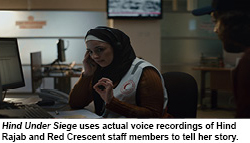
The Palestinian films All That’s Left of You and Hind Under Siege have won the 2026 San Diego Arab Film Festival Audience Choice Awards for feature length and short films, respectively. The Audience Choice Awards are given annually as determined by vote of Festival attendees.
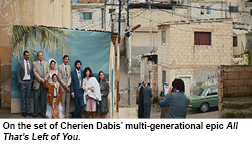
All That’s Left of You was directed by Palestinian-American filmmaker Cherien Dabis and was Jordan’s official submission for the Best International Film category for the 2026 Academy Awards. The film is an epic-scale journey into the depths of the Palestinian plight, masterfully tracing and carefully dissecting a multifactorial and convoluted intergenerational trauma. Starting in medias res, in a setting of pulsating action and anguish that leaves a tormenting question unresolved, we are plunged (and swept) from the get-go into a story of undulating pain and a recurring sense of futility. Divided into four chapters – the surge of violence during the Nakba in 1948; the consolidation of a new status quo in the West Bank in 1978; the outbreak of the First Intifada in 1988; and the filmic present of 2022 – Cherien Dabis’s devastating All That’s Left of You makes us both witnesses and participants in a fathomless and irreparable loss. Yet Dabis resists the lure of convenient sentimentality, weaving instead a labyrinthine character study, shrouding a series of underground and catastrophic conflicts within the bounds of family. In a meticulously paced yet heart-wrenching finale that imparts a bitter aftertaste of unfinished repatriation and existential uprooting, life and hope emerge as the sole bulwark against inhumanity and dehumanization.
Hind Under Siege was directed by Palestinian filmmaker Naji Salameh. The film tells the story of 5-year-old Palestinian girl Hind Rajab, who was separated from her mother and trapped in a car under heavy attack in Gaza surrounded by an Israeli tank in January 2024. Through authentic recordings and testimonies from the Palestine Red Crescent Society, including Hind Rajab’s voice, the film bears witness to the brutal realities of Israel’s genocide. Created with the blessing of Hind’s mother, the film honors Hind’s final moments while urging us to never stop speaking her name: Hind Rajab.


The San Diego Arab Film Festival (San Diego AFF) invites submissions for its upcoming festival scheduled for April 2-18, 2027.
San Diego AFF is seeking narrative, documentary, experimental and animated films, both features and shorts.
San Diego AFF began in 2012 and presents films from and about the Arab world that reinforce the humanity of Arab people and it highlights the dynamism and creativity of contemporary Arab culture. The Festival strives to show top-quality films that offer honest and realistic portrayals of Arab people and their culture, history and politics without reinforcing negative stereotypes.
San Diego AFF is a project of KARAMA, a 501(c)(3) in San Diego. For more information about KARAMA, visit www.karamanow.org.
San Diego AFF accepts submissions on FilmFreeway. Click on the link below to access the submission pages.
Schedule of Submissions
Opening Date: June 5, 2026
Regular Deadline: November 23, 2026
Late Deadline: December 18, 2026
Notification Date: January 29, 2027
Event Date: April 2-18
Awards and Prizes
Selected films will be entered into competition for Audience Awards for Best Feature Film and Best Short Film.
Rules and Terms
San Diego Arab Film Festival seeks films from and about the Arab world produced between January 1, 2024, and December 31, 2025. Films must have legible English subtitles unless there is little or no dialogue.
San Diego AFF prefers that submissions be made via Film Freeway, however downloadable links (with passwords) may be submitted to lchristian@sandiegoaff.org.
Formats
Selected films must be available in DCP, high resolution .264 or MP4 format with a
frame rate of 24fps. Please include director’s name, country of origin, and a brief description.
By special arrangements, submissions may be made by mail or delivery service with the understandings that San Diego AFF will not bear costs related to shipping and that submitted media may not be returned. Contact lchristian@sandiegoaff.org for further information.
Fees
Regular Deadline: Feature films, $15; short films, $10
Late Deadline: Feature films, $25; short films, $20.
Pay fees via Film Freeway at time of submission.
Selected Films
Official Selections will be asked to provide a password protected link for previewing, high resolutions stills and any available press materials for use in publicizing the film and the Festival.

2027 is the twelfth year that the San Diego Arab Film Festival is receiving support from the City of San Diego Commission for Arts and Culture. This recognition and support represents an important milestone for the Festival and for San Diego’s Arab Community: it shows that Arab culture is an important part of the fabric of San Diego! In addition, on-going support from the Arts and Culture Commission helps lay the groundwork for the Festival’s growth as a dynamic part of San Diego’s cultural life.
Financial support is provided by the City of San Diego Commission for Arts and Culture.
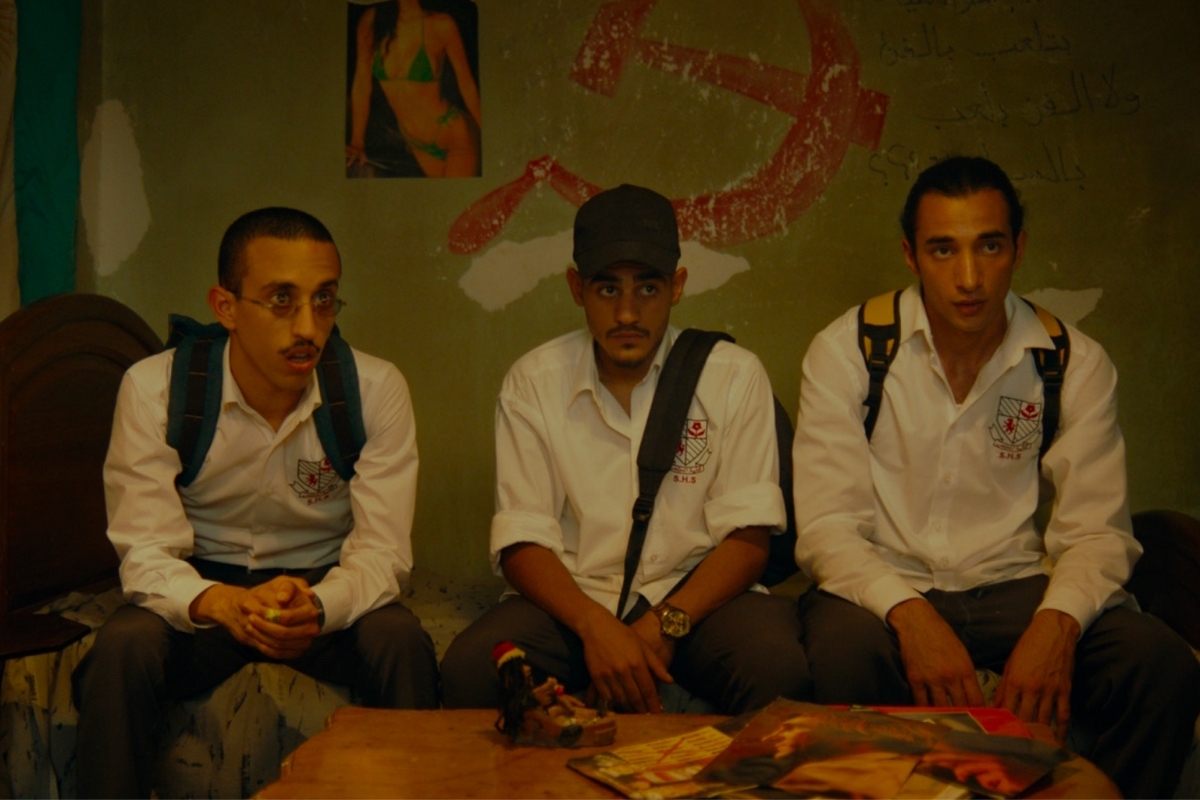
KARAMA’s vision is to grow the San Diego Arab Film Festival into a major cultural event that enhances the identity, perception and understanding of the Arab and the Arab world. Doing so will require time, energy and money. You can help in multiple ways…


For all inquires, please fill out the form and we’ll get back to you as soon as possible. We’ll be happy to answer all of your questions.
Gaza Bride 17, a film from Iran, follows Saleh, a fisherman from Gaza City, who suffers from post-traumatic stress disorder as a result of losing his only son in a tragic incident when he was 10 years old. Saleh decides to take his son fishing with him for the first time. Their day starts calmly and pleasantly on board the fishing boat, but suddenly, an Israeli military vessel intercepts them and randomly opens fire on them, resulting in the death of his only son. After this incident, Saleh begins a journey of suffering with post-traumatic stress disorder, trapped inside his mind. He takes us on a psychological journey.
Palestine, 1936. The uprising that took on an Empire. As villages across Mandatory Palestine rise against British colonial rule, Yusuf drifts between his rural home and the restless energy of Jerusalem, longing for a future beyond the growing unrest. But history is relentless. With rising numbers of Jewish immigrants escaping antisemitism in Europe, and the Palestinian population uniting in the largest and longest uprising against Britain’s 30-year dominion, all sides spiral towards inevitable collision in a decisive moment for the British Empire and the future of the entire region.
Palestine 36 was short-listed for an Academay Award for Best International Feature.
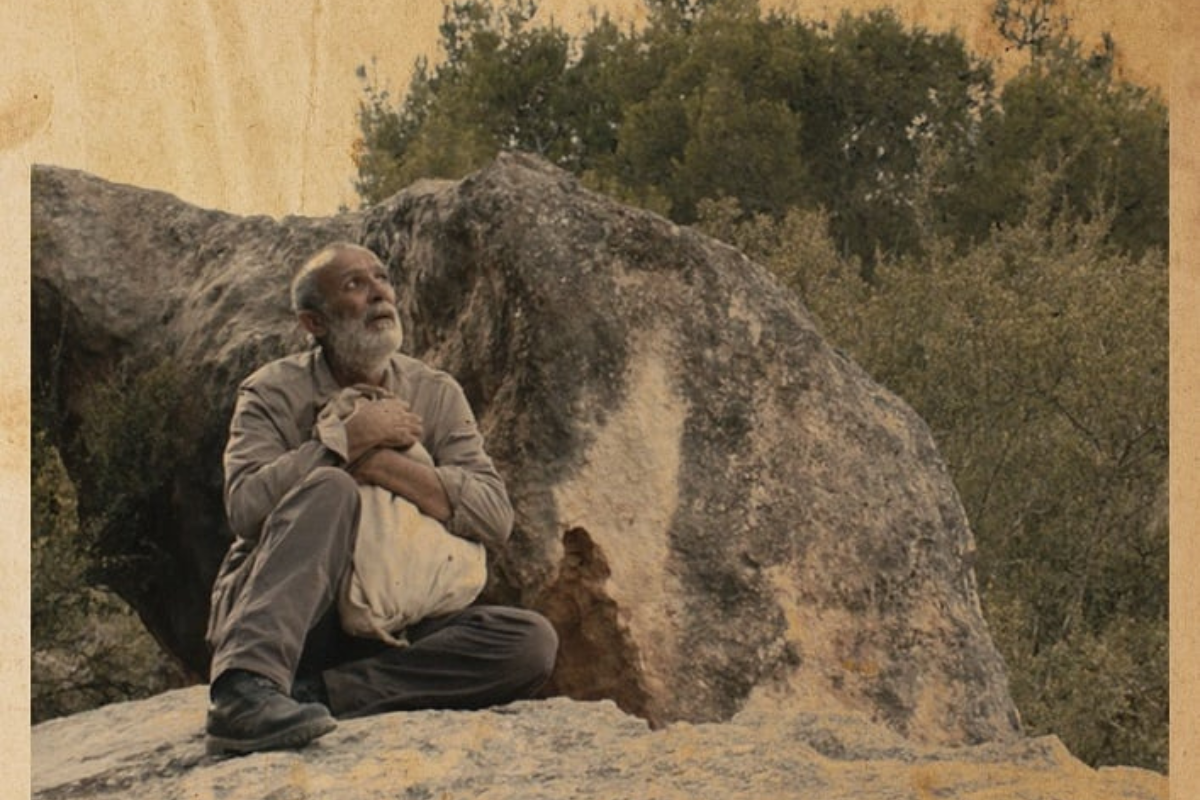
The Pail is a Yemeni documentary short film focusing on Hajj Abdullah, an elderly man who has spent over 60 years restoring the historic buildings of Sana’a. The 4-minute film highlights the profound bond between its subject and the ancient city’s heritage.
María Ángeles (Carmen Maura) is a fiercely independent senior living in the Spanish quarter of Tangier. When her daughter Clara (Marta Etura) arrives for a long-overdue visit, she comes with an agenda: to pressure María into selling the home — left in Clara’s name by her late father — to offset her own post-divorce financial struggles. But María, deeply embedded in her community and cherished by her neighbors, quietly resolves to stay.
Determined not to be displaced, she devises a resourceful plan to earn enough money to keep the apartment and buy back the cherished belongings her daughter hastily sold to an antique dealer in preparation for the sale of the property. In the process, María unexpectedly finds a romantic spark with someone she once viewed as an adversary.
Calle Malaga was the official submission to the Oscars for the Best International Film.
Dance! is a short film from Iran about an Israeli officer who in order to escape a patrol goes to an abandoned house in Gaza. However, the spirits of those killed in the house are waiting for him.
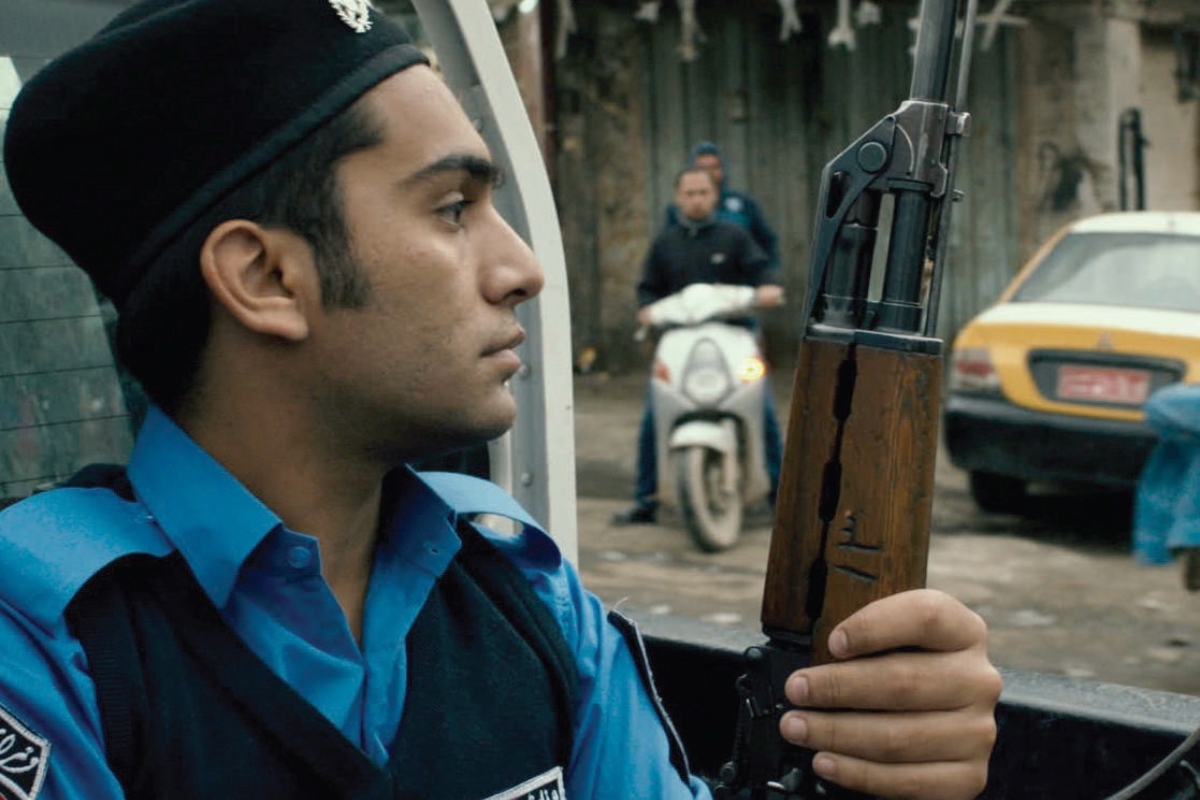
It’s “draw day” across Iraq, when schools select students for the honor of bringing items to their mandatory local celebrations of President Saddam Hussein’s birthday. Nine-year-old Lamia lives in the historic marshes with her spirited grandmother, Bibi. Before school, Bibi teaches Lamia clever tricks to avoid being chosen for the president’s cake. However, when Musa, the authoritative teacher, calls Lamia’s name for the most challenging task–the birthday cake–she has no choice but to accept. Refusing could mean imprisonment or even death.
The President’s Cake was Iraq’s submission to the Oscars for Best International Feature.
Worse Than Nuking follows Fedaa, a pediatrician and mother of three living in Gaza, as she struggles to care for children in a hospital while shielding her own family through two relentless years of war.
Across three decades of passion, loss, and hope, Nino and Yasmina are bound by a magnetic relationship. Torn between love and survival, they must decide whether to build a family and seek happiness in Lebanon, or leave their home, amid the country’s unfolding tragedies.
A Sad and Beautiful World was Lebanon’s submission to the Oscars for Best International Feature.
Hind Under Siege is a short film that tells the story of a real phone call between the Red Crescent and 6-year-old Hind Rajab, who became trapped in a car while hiding, in Gaza. The film unfolds through the perspective of Rana Al-Faqih, a compassionate and resilient Red Crescent worker, and those who bore witness to the event. It offers an intimate and powerful portrayal of courage, helplessness, and the human toll of war — as experienced by those who tried to help and those who were left behind.
If I Must Die – A Reading is an animated piece dedicated to Palestine: the animator’s interpretation of If I Must Die, a poem written by the late Palestinian professor Dr. Refaat Alareer.
Shajane, Maha, Muzamil, Khatab and the voice of the poet Chaikhoon. They are in their twenties, politically active and artistically creative. This film is a cinematic chorus, the collective portrait of a generation fighting for freedom with their words, poems and chants. Faced with a corrupted army and a paramilitary militia responsible of war crimes in Darfur, Kordofan and Blue Nile, they could have lost heart before starting. Without the dream guiding them, the power of imagination and the might of poetic discourse, they would not have overthrown the former regime. The film relates the uneven struggle that pitted the voices of the revolution against the fire of the militia.
An epic-scale journey into the depths of the Palestinian plight, masterfully tracing and carefully dissecting a multifactorial and convoluted intergenerational trauma. Starting in medias res, in a setting of pulsating action and anguish that leaves a tormenting question unresolved, we are plunged (and swept) from the get-go into a story of undulating pain and a recurring sense of futility. Divided into four chapters – the surge of violence during the Nakba in 1948; the consolidation of a new status quo in the West Bank in 1978; the outbreak of the First Intifada in 1988; and the filmic present of 2022.
Cherien Dabis’s devastating All That’s Left of You makes us both witnesses and participants in a fathomless and irreparable loss. Yet Dabis resists the lure of convenient sentimentality, weaving instead a labyrinthine character study, shrouding a series of underground and catastrophic conflicts within the bounds of family. In a meticulously paced yet heart-wrenching finale that imparts a bitter aftertaste of unfinished repatriation and existential uprooting, life and hope emerge as the sole bulwark against inhumanity and dehumanization.
All That’s left of You was Jordan’s Submission to the Oscars and was short-listed by the Academy for Best International Film.
In this short film, Mohammed, a young Palestinian, embarks on a tense journey to cross an Israeli checkpoint with a temporary Polish identity card. After being turned down by other drivers, Farouk, a well-meaning taxi driver, offers him a ride. However, they soon encounter severe trouble when the checkpoint authorities discover Mohammed’s previous failed attempt to cross. The film powerfully captures the oppressive reality of life under occupation and the personal costs involved.
Red Crescent volunteers receive an emergency call. A 6-year old girl is trapped in a car under IDF fire in Gaza, pleading for rescue. While trying to keep her on the line, they do everything they can to get an ambulance to her. The Voice of Hind Rajab was the official submission to the Oscars from Tunisia and was nominated by the Academy for Best International Feature.
Screening #2 begins at 8:35 PM:
In this short film, set in 1956, 8 year old Nabil navigates through new social norms he cannot fathom that impact his next door best friend in post nationalized Egypt. Inspired by true events.
A comedic ode to Tunisia’s youth, TUNIS-DJERBA presents the story of Alyssa, a rebellious 19 year-old girl, and her friend Mehdi – a shy and introverted 23-year-old young man – who use their imagination to escape their unpromising reality. When they discover a contest in the south of Tunisia that may allow them to flee for real, they decide to undertake the road trip regardless of the obstacles in their way.